May 2, 2026 • Celeste Morrow • 8 min reading time • Prices verified June 4, 2026
4% to 20% Niacinamide: Which Concentration Actually Matches Your Skin Concern
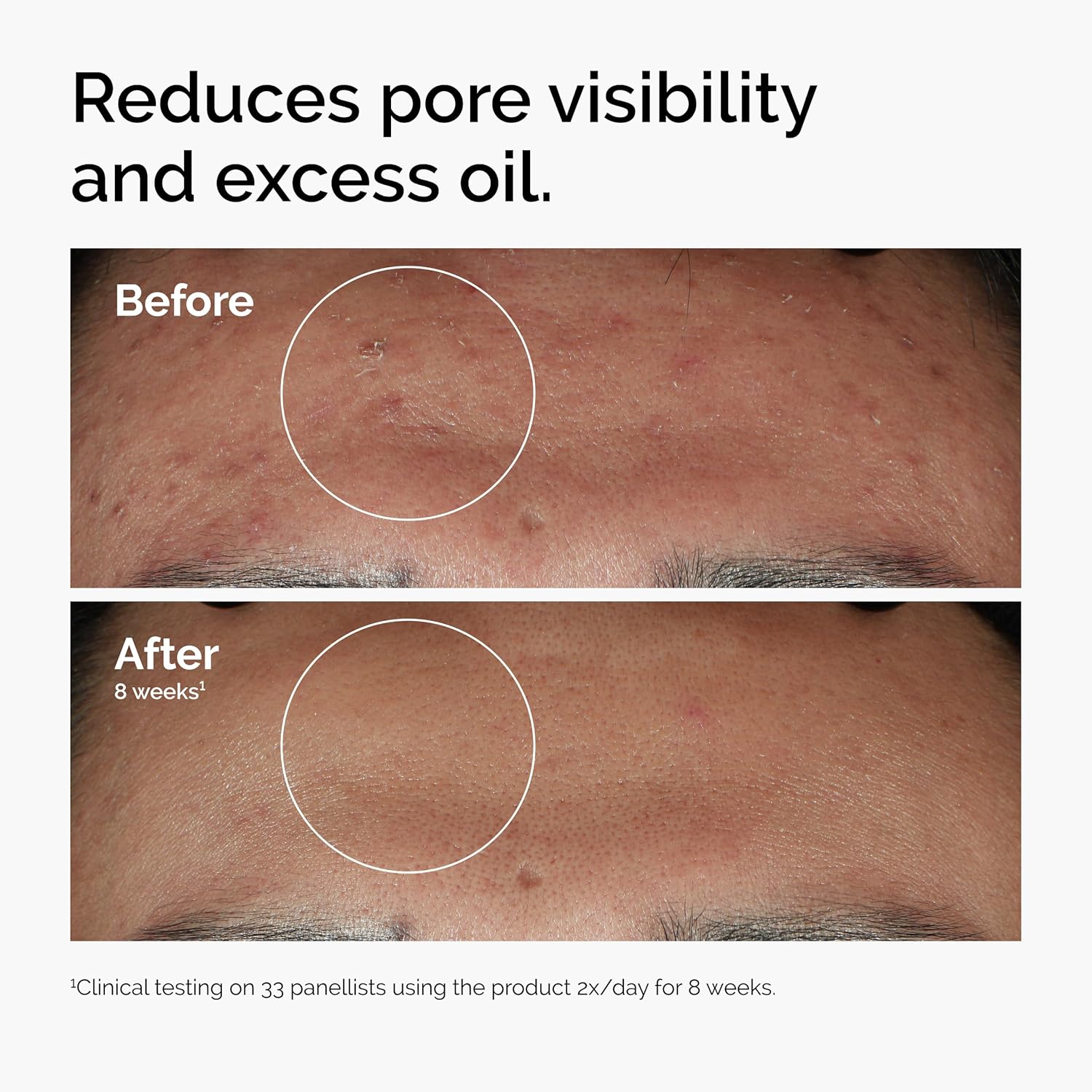
Niacinamide (say it: nye-ah-SIN-ah-mide) is a form of vitamin B3 — a water-soluble nutrient your skin can actually absorb and use when it’s applied topically. Over the past several years it has become one of the most universally recommended ingredients in skincare because it tackles a remarkably wide range of concerns: uneven tone, enlarged-looking pores, excess oil, a weakened moisture barrier, and early signs of aging. You’ll find it in drugstore moisturizers at $12 and in clinical serums at $120. What the marketing doesn’t always tell you is that the percentage concentration changes what the ingredient does — a 4% formula and a 20% formula are not interchangeable. If you’ve been browsing niacinamide serums and wondering whether the number on the label actually matters, the answer is yes, and this guide will show you exactly how to read it.
Why Concentration Is the Variable That Most Buyers Miss
Most ingredients in skincare are either present in a functionally effective amount or they’re not. Niacinamide is more nuanced: the same molecule performs different jobs depending on how much of it is sitting in the formula, and the research literature reflects that.
Per Paula’s Choice’s ingredient dictionary and supporting formulation notes, the efficacy threshold for most studied niacinamide benefits — sebum regulation, barrier reinforcement, and early brightening — begins at roughly 2–5%. That’s the floor for doing meaningful work. The ceiling for routine use is less settled, but most dermatologists cited across Byrdie’s niacinamide guide and Self.com’s reporting put the sweet spot for general-purpose use between 5% and 10%, with concentrations above 10% reserved for specific, targeted concerns under monitored conditions.
This matters for buying decisions because the market currently shelves products from 2% (tucked into a moisturizer as a supporting ingredient) all the way to 20% (positioned as a clinical-strength treatment). The label number is the single fastest way to assess whether a product is formulated for maintenance, targeted correction, or aggressive intervention — but only if you know what each band actually delivers.
The Concentration Bands, Decoded
2–4%: Maintenance and prevention. At this range, niacinamide functions primarily as a barrier-support and anti-inflammatory ingredient. Cosmetics & Toiletries’ formulation literature notes that even low concentrations measurably reduce transepidermal water loss (TEWL — the rate at which moisture evaporates through your skin), which is why you’ll find this band in moisturizers, SPF products, and gentle formulas designed for sensitive, reactive, or compromised skin. Allure’s niacinamide overview confirms that reviewers with rosacea-prone or easily irritated skin consistently tolerate and benefit from this range without triggering a reaction. If you’re new to the ingredient or managing a disrupted barrier — post-retinol peeling, post-prescription treatment, or a sensitized skin state — this is your starting point.
5–10%: The clinical workhorse range. This is where the majority of well-studied, independently reviewed serums live. Byrdie’s complete niacinamide guide summarizes the clinical picture accurately: controlled studies at 5% show measurable reductions in hyperpigmentation (dark spots caused by sun damage or post-breakout marks, also called post-inflammatory hyperpigmentation or PIH) over 8–12 weeks. At this range, pore appearance — which is really about oil production and congestion, not literal pore size — is notably affected. Paula’s Choice notes that 5–10% niacinamide consistently performs in formulation-side testing for sebum regulation, making it the most relevant range for oily, acne-prone, and combination skin types. This is also the range where niacinamide pairs most synergistically with actives like retinol and vitamin C without competition, which matters if you’re layering.
10–20%: High-dose, targeted intervention. Above 10%, niacinamide shifts from general correction toward more intensive treatment territory. Self.com’s dermatologist sources flag that at 15–20%, the ingredient is being used for more aggressive brightening, sebum suppression in clinical acne protocols, and — in some formulations — to support compromised or post-procedure skin recovery. The trade-off is meaningful: a subset of users, particularly those with sensitive skin or a compromised barrier, report flushing, redness, or a tingling sensation at concentrations above 10%. This isn’t universal, and it isn’t the same as irritation from an exfoliant, but it’s a documented response. At 20%, you’re in treatment-serum territory; this is not a daily-driver for most people’s routines.
By the Numbers: Concentration vs. Primary Use Case
| Concentration | Primary Benefit | Best Skin Type Fit | Typical Format |
|---|---|---|---|
| 2–4% | Barrier repair, anti-inflammatory | Sensitive, reactive, post-procedure | Moisturizer, toner |
| 5–7% | Brightening, mild oil control | Combination, normal-to-oily | Serum, essence |
| 8–10% | Active pore/sebum treatment, PIH correction | Oily, acne-prone, uneven tone | Concentrated serum |
| 15–20% | Intensive brightening, high-sebum control | Targeted use, tolerant skin | Treatment serum, ampoule |
How to Match the Number to Your Actual Concern
Here’s where most buyers go wrong: they see a higher number and assume it means a better product. That logic works for SPF; it doesn’t work for niacinamide.
If your primary concern is a sensitized or damaged barrier: You want the 2–4% range embedded in a moisturizer or a fragrance-free serum with a simple, short ingredient deck. High-concentration niacinamide applied to a compromised barrier can amplify the flushing response. Start low, stabilize the barrier, then layer up if needed. Products like CeraVe’s PM Facial Moisturizing Lotion (contains niacinamide in the lower functional range alongside ceramides) are frequently cited by dermatologists on Self.com and Allure as appropriate entry points for this use case.
If you’re targeting post-breakout dark marks (PIH) or general uneven tone: The 5–10% range is where the literature actually supports the brightening mechanism. Niacinamide at this concentration inhibits the transfer of melanosomes — the pigment packets that cause dark spots — from melanocytes into surrounding skin cells. Per Byrdie’s reporting on the underlying research, you need consistent daily use over 8–12 weeks to see the shift, and you need that concentration to be reliably present. The Ordinary’s Niacinamide 10% + Zinc 1% and Paula’s Choice 10% Niacinamide Booster are both frequently cited across Byrdie and Paula’s Choice’s own published reviews as representative of this evidence-backed range. At the prestige tier, products like Glossier’s Super Pure (at a lower percentage) and SkinCeuticals’ formulations sit toward the lower end of this band and trade concentration for formula elegance and additional supporting ingredients.
If your dominant concern is oily skin or enlarged-looking pores: You want to be in the 5–10% range with zinc as a supporting ingredient where possible. The zinc (typically zinc PCA) assists with sebum regulation at the surface while niacinamide works at the follicular level. The Ordinary’s formulation is one of the few affordable products that has become a reference-point for this pairing — across aggregated reviews on Dermstore and Sephora, owners consistently report visible mattification within 4–6 weeks.
If you’re considering 15–20% for aggressive brightening: Assess your baseline skin tolerance first. If you’ve run 10% niacinamide for at least 6–8 weeks without any flushing or redness, and you’re targeting stubborn hyperpigmentation that hasn’t responded to the standard range, moving to 15–20% is defensible. But know that formulation matters enormously here: a 20% niacinamide serum in a well-buffered, low-pH, hydrating base will behave very differently than the same percentage in a simple water-based solution. Cosmetics & Toiletries’ formulation notes flag that high-concentration niacinamide is sensitive to formula pH and storage conditions — a degraded or poorly buffered product at 20% is more likely to generate nicotinic acid (a byproduct that causes flushing) than a well-formulated 10%.
The Layering Question: Niacinamide With Vitamin C and Retinol
This comes up constantly and deserves a direct answer. The old concern — that niacinamide and vitamin C (specifically L-ascorbic acid, the most studied form) would react and cancel each other out — has been largely revised by current formulation science. Paula’s Choice’s ingredient research notes that while the two can form a yellow-tinged complex at high temperatures, the quantities involved in typical product use are too small to meaningfully neutralize either ingredient’s efficacy. In practical terms, layering them in a routine is not a problem at normal skin-temperature conditions.
With retinol, niacinamide is actively complementary. Retinol (vitamin A, which accelerates cell turnover and can cause initial dryness and irritation) pairs well with niacinamide precisely because niacinamide’s barrier-support function buffers some of the sensitization. A pattern that owners across Byrdie and Allure consistently report effective: retinol in the PM routine followed by a 5–10% niacinamide serum to offset barrier disruption.
The Decision Frame
If you’re standing in front of a shelf or a product page right now, here’s the filter to apply:
- Sensitive, reactive, or compromised barrier? → 2–4%, embedded in a moisturizer, no fragrance. Do not start at 10%.
- Post-breakout marks, general uneven tone, or a first niacinamide serum? → 5–10%, standalone serum, used daily AM or PM. Byrdie and Paula’s Choice both point to this range as the evidence baseline.
- Oily skin, visible pores, sebum overproduction as primary complaint? → 5–10% with zinc, used consistently for a minimum of 6 weeks before evaluating.
- Stubborn hyperpigmentation, tolerant skin, experienced with actives? → 10–20%, but vet the formulation. Check that the formula has a supporting cast (hydrating agents, a buffered base) and that you’re buying from an authorized retailer. At this concentration, formula integrity matters more than the percentage alone.
- Budget or price-tier consideration? → The evidence does not require spending more to get into the effective range. Drugstore options from The Ordinary (approximately $6–$8) and CeraVe are consistently cited as hitting the same functional benchmarks as prestige-tier alternatives. The premium at the $80–$150 end buys formula elegance, supporting ingredients, and sensory experience — not necessarily a higher-performing concentration.
The number on the label is a starting point, not a verdict. Match it to your concern, check the formula’s supporting cast, and give it 8–12 weeks before deciding the ingredient isn’t working. Niacinamide rewards patience more than it rewards the highest concentration you can find.