April 10, 2026 • Celeste Morrow • 9 min reading time • Prices verified June 4, 2026
First Retinol to Full-Strength: Matching Retinoid Formulas to Your Tolerance Level
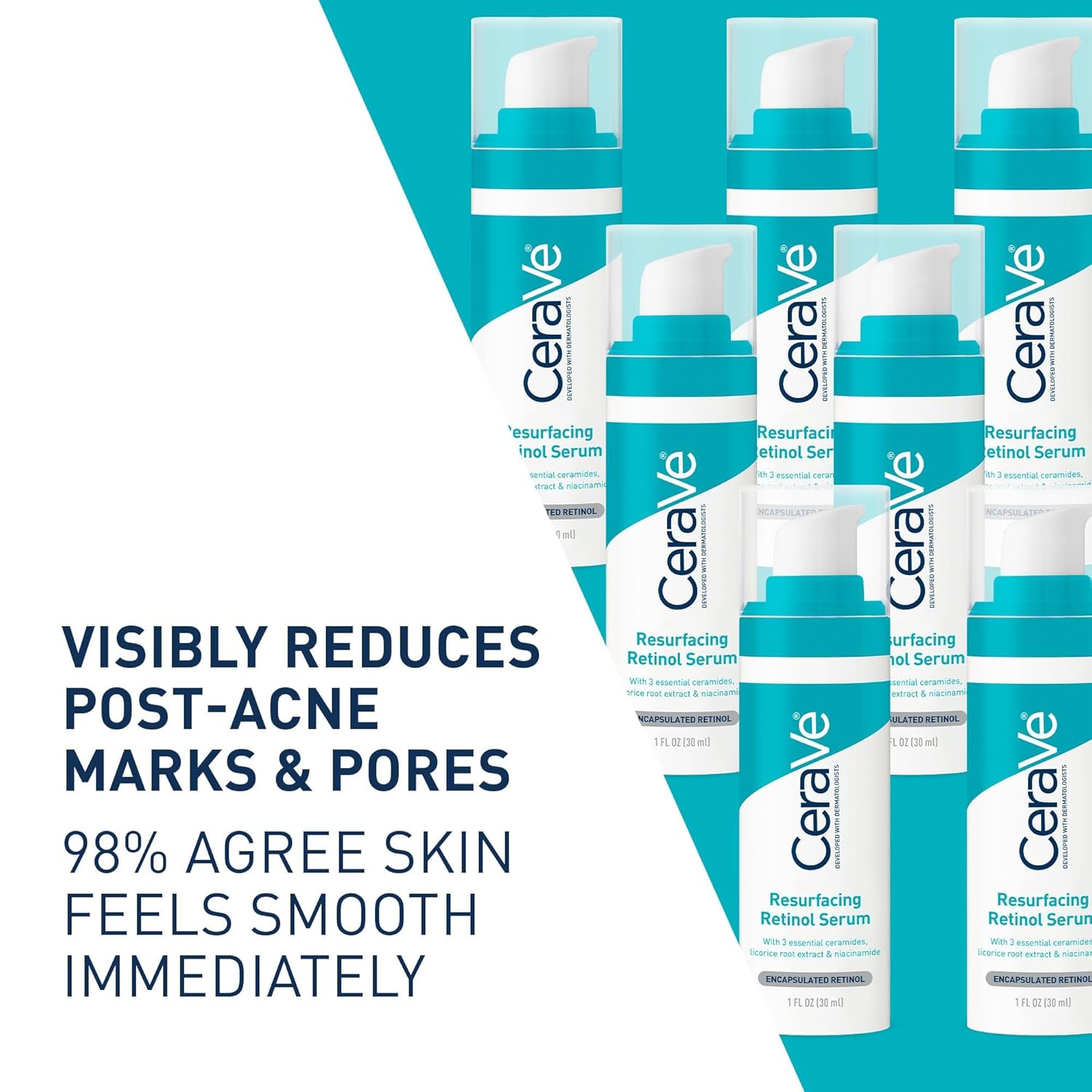
If you’ve spent any time around skincare, you’ve heard people swear by retinoids — the umbrella term for a family of vitamin A derivatives that dermatologists consider the most rigorously proven anti-aging and skin-renewing ingredients available without a prescription. Retinol (the over-the-counter form), retinaldehyde (a step stronger, still OTC), and tretinoin (prescription-only, most potent) all work by speeding up your skin’s natural cell-turnover cycle, which fades dark spots, smooths texture, and — over months of consistent use — stimulates collagen production. The catch? Start too strong or apply too often, and you’ll deal with peeling, redness, and a compromised skin barrier that makes you want to quit entirely. This guide is built around one practical question: given where your skin is right now, which specific formula, at which concentration, from which price tier actually makes sense for you — and why does that decision matter more than any other factor in your skincare routine?
Why Tolerance Mapping Beats Chasing the Highest Percentage
The retinoid world has a marketing problem: brands lead with percentages (0.025%, 0.1%, 1%) as though higher automatically means better results, faster. But the American Academy of Dermatology’s clinical guidance is consistently clear that the rate-limiting factor in retinoid outcomes is sustained use over six to twelve months, not the starting concentration. A 1% retinol product abandoned after three weeks of irritation produces exactly zero long-term results. A 0.025% formula used consistently for a year demonstrably does.
What dermatologists call “retinization” — the adjustment period during which your skin upregulates its cellular machinery to handle the ingredient — typically runs four to twelve weeks. During that window, dryness, flaking, and a temporary uptick in breakouts (purging) are normal and expected. The intensity of that adjustment period scales directly with starting concentration and application frequency. That’s the core decision frame here: you are not choosing whether to experience retinization, you are choosing how disruptive you want that period to be.
Byrdie’s updated retinoid guide notes that dermatologists broadly agree on a “start low, go slow” protocol — beginning once or twice weekly, at the lowest effective concentration, and titrating up only after your skin has demonstrated comfort for at least four consecutive weeks at the current level. Paula’s Choice’s ingredient dictionary reinforces this, pointing out that most retinol formulas on the US market under-deliver not because the molecule is weak but because users abandon them during the adjustment window before efficacy kicks in.
The Retinoid Potency Ladder (Simplified)
| Form | Conversion Steps to Retinoic Acid | OTC Available? | Relative Irritation Potential |
|---|---|---|---|
| Retinol (0.025–0.1%) | 2 steps | Yes | Low–Moderate |
| Retinol (0.3–1%) | 2 steps | Yes | Moderate–High |
| Retinaldehyde (0.05–0.1%) | 1 step | Yes | Moderate |
| Tretinoin (0.025–0.1%) | 0 steps (already active) | Prescription only | High |
Tier One: Entry-Level (Retinol-Naive Skin, Sensitive Skin, Ages 20s–Early 30s)
The goal here is acclimatization, not acceleration.
If your skin has never used a retinoid, or if you’ve tried one before and stopped because of irritation, your first purchase should prioritize delivery system and supporting ingredients over percentage. Encapsulated retinol — where the retinol molecule is wrapped in a lipid or polymer capsule that releases gradually — meaningfully reduces the irritation load without sacrificing eventual efficacy. Look for this on ingredient decks as “retinol” listed alongside ingredients like hydroxypinacolone retinoate (HPR), squalane, or ceramides, which buffer the delivery.
Where to start on price: The $25–$55 tier is genuinely competitive here. Reviewers at Allure consistently rate RoC Retinol Correxion Line Smoothing Serum (widely available at drugstore and Target) as a reliable encapsulated entry point, noting that long-term users report measurable texture improvement without the flaking common to non-encapsulated formulas at comparable concentrations. At the accessible prestige tier, Olay Regenerist Retinol 24 Night Moisturizer brings a supporting peptide matrix that experienced users cite as a key reason their skin handled it without barrier disruption.
Moving into the $60–$120 range, the Paula’s Choice 0.3% Retinol + 2% Bakuchiol Treatment is worth the step-up for sensitive skin: the bakuchiol (a plant-derived ingredient with independent skin-smoothing evidence) isn’t a retinol replacement, but Paula’s Choice’s formulation philosophy — detailed publicly in their ingredient dictionary — prioritizes barrier-supporting actives alongside the retinol, which reviewers at Self.com call out as the reason it works for rosacea-adjacent skin that has failed other retinols.
Application protocol for Tier One: Once weekly, applied to dry skin (not damp — water accelerates absorption and irritation), under moisturizer or sandwiched between two moisturizer layers. Add a second application night only after four full weeks with no irritation.
Tier Two: Intermediate (Some Retinol Experience, Building Toward 0.5–1%)
The goal is increasing the biological signal without triggering a setback.
You’ve made it through retinization at a low percentage. Your skin is no longer flaking after applications. This is the inflection point where most users either plateau (staying at 0.1% indefinitely with minimal ongoing benefit) or overcorrect (jumping straight to prescription-strength and rekindling irritation). The productive middle path is a move to 0.3–0.5% retinol or a pivot to retinaldehyde, which converts to active retinoic acid in one enzymatic step instead of two — producing stronger effects than equivalent-percentage retinol with somewhat more manageable irritation than jumping to 1%.
The retinaldehyde case: Vogue’s dermatologist roundup from March 2025 highlighted retinaldehyde as the most underutilized OTC retinoid tier, noting that European brands have formulated with it longer and that the US prestige market is catching up. Medik8 Crystal Retinal 3 (0.03% retinaldehyde, available through Dermstore and brand DTC) is repeatedly cited by professional-adjacent reviewers as the bridge formula: stronger clinical activity than most 0.5% retinols, with a hyaluronic acid and peptide base that keeps the barrier stable during the adjustment window. Medik8’s own sequential system — Crystal Retinal 1 through 10 — is the clearest explicit tolerance-mapping product architecture currently on the market, designed for exactly the incremental escalation this protocol requires.
At the 0.5–1% retinol tier, SkinCeuticals Retinol 0.5 Refining Night Cream (available at Dermstore and authorized medical spas) benchmarks consistently well in aggregated professional reviews for its stabilized, slow-release formula. Owners report the 0.5% as genuinely tolerable for acclimated skin on a twice-weekly schedule, with a move to 1% after three to four months.
By the numbers:
- Medik8 Crystal Retinal 3: ~$62 / 30ml → $2.07/ml
- SkinCeuticals Retinol 0.5: ~$88 / 30ml → $2.93/ml
- SkinCeuticals Retinol 1.0: ~$98 / 30ml → $3.27/ml
The per-ml step-up from 0.5 to 1.0 is modest; the tolerance leap is not. Most intermediate users report spending four to six months at 0.5 before the 1.0 formula stops causing any noticeable tightness.
Tier Three: Advanced and Prestige (Acclimated Skin, Full-Strength Ambitions)
The goal is maintenance efficacy at the highest sustainable dose — and assessing whether the prescription conversation is overdue.
Acclimated skin at 0.5–1% retinol has two legitimate upgrade paths: continue climbing within the OTC retinol/retinaldehyde ecosystem toward formulas with stronger supporting actives, or have the direct conversation with a dermatologist about tretinoin (0.025%–0.1% prescription retinoic acid), which bypasses the conversion chain entirely and operates at a different efficacy tier.
For readers committed to the OTC luxury tier, the Augustinus Bader The Retinol Serum (approximately $285 at Sephora, as of May 2026 pricing) has accumulated a consistent pattern of reviews among long-term retinol users that focuses on two things: the TFC8 growth factor base that reportedly minimizes barrier disruption at high-activity levels, and the layered retinol/retinaldehyde/bakuchiol combination that owners describe as producing noticeable collagen-density improvement after six months without the irritation plateaus common at 1% standalone formulas. It’s a genuine luxury price tag; the cost-per-use math requires consistent use over twelve-plus months to justify it against a $98 SkinCeuticals rotation.
La Roche-Posay Redermic R Eyes Retinol Eye Cream is worth noting here as the dermatologist-recommended standard for periorbital skin — the thin skin around the eyes that tolerates retinol poorly at concentrations appropriate for the face. The AAD’s clinical guidance specifies that eye-area retinol should start at 0.025% or lower even in acclimated users.
The tretinoin conversation: If you’ve been at 0.5–1% retinol for six months or more and your primary concerns are acne, significant photoaging, or melasma, the evidence gap between OTC retinol and prescription tretinoin is real and documented. The AAD’s clinical review consistently positions tretinoin as the evidence standard. Telehealth dermatology platforms have made prescription access meaningfully easier in 2025–2026; this is not the article to substitute for that consult, and any dermatologist worth seeing will want to know your current retinol history before prescribing.
The Decision Rule: If X, Then Y
This is the cleanest distillation of the tolerance-mapping framework:
If you are retinoid-naive or sensitive: Start at encapsulated 0.025–0.1% retinol in a ceramide or squalane base, once weekly, for a minimum of eight weeks before evaluating. Do not buy a 1% product to “work up to” — you will use it too soon.
If you’ve tolerated low-percentage retinol for three-plus months with no current irritation: Move to retinaldehyde (Medik8 Crystal Retinal 3 is the clearest entry), or step to 0.3–0.5% retinol with a supporting peptide or barrier-repair base. Twice-weekly application is appropriate.
If you’ve been consistent at 0.5% for six-plus months: The 1% tier is available to you. Reassess whether OTC retinol is still the right tool for your primary concerns — if it’s acne or significant pigmentation, a dermatologist conversation about tretinoin is overdue.
If budget is the constraint: The efficacy difference between a $25 encapsulated retinol and a $285 prestige retinol is real but secondary to consistency of use. A $30 formula you apply every week for a year outperforms a $285 formula you apply sporadically during a stressful month. Buy the tier you’ll actually stick with.
The single most predictive variable in your retinoid outcomes, according to every credentialed source in this space — the AAD, dermatologists quoted in Vogue’s roundup, Byrdie’s protocol deep-dives — is not the brand, the percentage, or the price. It is uninterrupted use for at least twelve weeks before expecting visible results. Match the formula to your tolerance, commit to the protocol, and the ingredient will do the rest.