May 20, 2026 • Celeste Morrow • 9 min reading time • Prices verified June 4, 2026
The Vitamin C Dupe Ladder: When The Ordinary Genuinely Holds Up and When Obagi Earns Its Price
Vitamin C is one of those skincare ingredients that shows up everywhere — from a $7 bottle at the drugstore to a $100+ clinical serum behind the pharmacy counter — and the marketing on every single one of them promises the same thing: brighter skin, faded dark spots, more even tone. If you’re standing in that aisle (or scrolling a product page at 11 p.m.) trying to figure out whether price actually tracks with performance, you’re not alone. Vitamin C is an antioxidant — a compound that protects your skin cells from environmental damage — and when used consistently, research supports its role in reducing hyperpigmentation (uneven skin tone caused by excess melanin), stimulating collagen production, and shielding skin from free radicals generated by UV exposure and pollution. What the marketing doesn’t explain is that “vitamin C” on a label can mean a dozen different molecules, and those molecules behave very differently in terms of stability, potency, and how well they penetrate your skin. That gap in communication is exactly where buying mistakes happen — and where this guide picks up.
Once you understand what you’re actually buying, the dupe ladder becomes legible. The question stops being “is The Ordinary as good as Obagi?” and starts being “for my skin concern, at my price point, which formulation architecture actually delivers?” Let’s build that framework.
The Molecule Problem: Why “Vitamin C” Is Not One Thing
This is the fulcrum of every vitamin C buying decision, and it’s the part most product descriptions gloss over.
L-ascorbic acid (L-AA) is the bioactive form — the molecule your skin cells can directly use. It is the most research-backed, the most potent, and, inconveniently, the most chemically unstable. Exposed to light, air, or water, L-AA oxidizes rapidly, turning a serum from clear or pale yellow to amber or brown and losing meaningful efficacy. Paula’s Choice Skincare Education notes that L-ascorbic acid serums require a pH below 3.5 to penetrate the skin effectively, which also makes them the most likely form to cause sensitivity or stinging — especially on compromised or reactive skin.
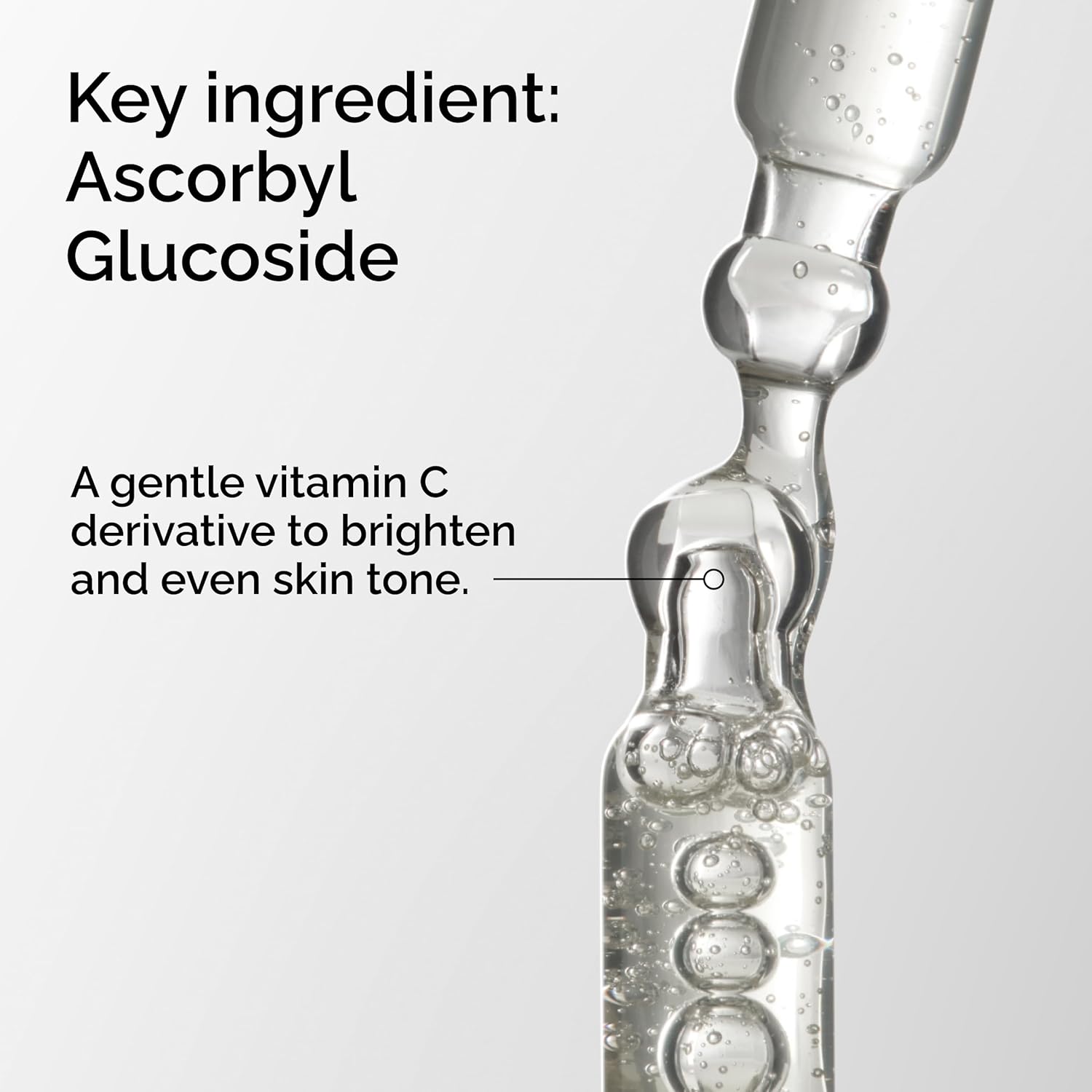
Vitamin C derivatives — the category that includes ascorbyl glucoside, sodium ascorbyl phosphate, ascorbyl tetraisopalmitate, and the one you’ll see premium brands leaning into, THD ascorbate (tetrahexyldecyl ascorbate) — are chemically stabilized forms that convert to L-ascorbic acid after absorption. They’re gentler, they last longer on the shelf, and they’re less likely to oxidize in the bottle. The trade-off: conversion efficiency varies by derivative, and the clinical research base, while growing, is thinner than L-AA’s decades-long evidence record. Dermstore’s ingredient education content describes THD ascorbate specifically as oil-soluble and highly stable, with penetration depth that may outperform L-AA in certain delivery contexts — though “may” is doing real work in that sentence because comparative human-trial data remains limited.
Concentration matters, but not linearly. The relationship between L-AA percentage and efficacy tops out: studies generally show meaningful results at 10–20%, with diminishing returns above that threshold and sharply increased irritation risk. A 30% L-AA serum is not “50% better” than a 20% one — it is just more likely to redden sensitive skin without proportional gain.
By the Numbers: The Vitamin C Dupe Ladder at a Glance
| Price Tier | Representative Product | Form | Concentration | Best For |
|---|---|---|---|---|
| $7–$15 | The Ordinary Ascorbyl Glucoside Solution 12% | Derivative (ascorbyl glucoside) | 12% | Beginners; sensitive skin; maintenance |
| $25–$35 | The Ordinary Vitamin C Suspension 23% + HA | L-ascorbic acid | 23% | Tolerant skin; budget-first approach |
| $65–$85 | SkinCeuticals C E Ferulic | L-ascorbic acid + ferulic acid + vitamin E | 15% | Proven clinical benchmark |
| $90–$120 | Obagi Professional-C Serum 20% | L-ascorbic acid | 20% | Clinical-grade potency; professional protocols |
Prices reflect U.S. authorized-retailer averages as of May 2026. SkinCeuticals and Obagi are widely available through Dermstore, authorized medical spa retail, and brand DTC channels.
Where The Ordinary Actually Earns Its Spot
Let’s be direct: The Ordinary’s vitamin C lineup is genuinely useful — within a defined scope. The confusion arises when buyers treat every product in the line identically.
The Ascorbyl Glucoside Solution 12% is where The Ordinary performs most reliably. Ascorbyl glucoside is a stable, water-soluble derivative that reviewers at Byrdie consistently describe as a solid beginner and maintenance option — lower irritation potential, no oxidation drama, easy layering with other actives. It is not going to deliver the same visible correction speed as a well-formulated L-ascorbic acid serum, but for someone building a routine, managing sensitivity, or maintaining results already achieved with a stronger formula, it fits. The price-per-use math is genuinely favorable: at roughly $7 for 30ml, you’re paying less per drop than almost any comparable stable derivative on the market.
The Vitamin C Suspension 23% + HA Spheres 2% is trickier to recommend cleanly. It is a water-free, anhydrous L-ascorbic acid formula — one formulation strategy to sidestep the oxidation problem. Owners report the texture as gritty to powdery, which creates an absorption and layering challenge that goes beyond personal preference. Allure’s coverage of vitamin C serums has noted that while the concentration is high on paper, delivery efficiency from a suspension format is debated among formulators, and the sensorial experience discourages consistent use — which is the only thing that produces results with any topical. If you don’t use it regularly because it feels strange, the concentration is irrelevant.
The Ordinary’s derivatives are dupes for what, exactly? This is the frame that clarifies the decision. They’re reasonable stand-ins for mid-market stable-derivative serums — not for clinical L-ascorbic acid formulas like SkinCeuticals or Obagi. Treating them as direct dupes for the latter category is where the disappointment comes from.
Where Obagi and SkinCeuticals Justify the Gap
The $90–$120 price point for Obagi Professional-C and the $160–$180 range for SkinCeuticals C E Ferulic isn’t marketing padding — it’s primarily formulation architecture and stability investment.
SkinCeuticals C E Ferulic remains the clinical reference standard largely because of its patented delivery system and the combination formula: 15% L-ascorbic acid, 1% alpha-tocopherol (vitamin E), and 0.5% ferulic acid. Ferulic acid is a plant-derived antioxidant that, combined with vitamins C and E, demonstrably extends the stability of L-AA and appears to amplify its photoprotective effect. Per published research cited in Allure’s dermatologist-sourced coverage, this synergistic combination has meaningful clinical backing that single-ingredient vitamin C formulas don’t replicate. The result is a serum that stays active longer in both the bottle and on-skin.
Obagi Professional-C Serum 20% takes a different approach: straight L-ascorbic acid at a high but evidence-supported concentration, formulated for a clinical-grade protocol context. Dermstore’s editorial content positions it as particularly suited to users targeting significant hyperpigmentation or post-procedure skin — situations where maximum potency and professional oversight are already part of the picture. Reviewers in the professional-adjacent and esthetics community consistently note it as a workhorse formula in treatment-room retail.
Neither of these is “better” in a vacuum — they are better for specific use cases. If your concern is maintenance and general antioxidant protection, paying $170 for SkinCeuticals over The Ordinary’s derivative is over-engineering the solution. If your concern is stubborn melasma, post-acne hyperpigmentation, or supporting a retinol or resurfacing protocol, the clinical formulas earn their price because they’re solving a harder problem with more validated tools.
A word on authorized retail: Both SkinCeuticals and Obagi have known counterfeit and gray-market problems at third-party marketplaces. Paula’s Choice Skincare Education specifically flags that L-ascorbic acid formulas are particularly vulnerable to efficacy loss from poor storage conditions in non-authorized supply chains — a real concern when a serum’s entire value proposition is fragile molecular stability. For either brand at these price points, purchasing through Dermstore, brand DTC, or a licensed medical-spa retail partner is worth the due diligence.
The Decision Frame: If X, Then Y
Here is where the analysis collapses into actionable rules — because the worst outcome is analysis paralysis that leaves you using an oxidized bottle of something that didn’t fit your situation in the first place.
If you have sensitive, reactive, or rosacea-prone skin: Start with The Ordinary Ascorbyl Glucoside Solution 12% or a comparable stable derivative. The lower irritation potential matters more than raw potency at this stage. Revisit the ladder once your barrier is stable.
If you’re new to vitamin C and want to test tolerance: The Ordinary Ascorbyl Glucoside is a low-stakes entry point. If you tolerate it well over 6–8 weeks and want to level up, move to a low-percentage L-AA formula (10–15%) before jumping to the 20%+ clinical tier.
If you’re targeting active hyperpigmentation — melasma, post-inflammatory marks, sun damage — and you’re already a stable active user: This is where the L-AA clinical tier pays off. Budget for either SkinCeuticals C E Ferulic or Obagi Professional-C 20%, buy from an authorized retailer, and commit to at least 12 weeks of consistent use before evaluating results. Byrdie’s aggregated review data shows the most dramatic user-reported outcomes in this cohort, but also the longest runway to visible change.
If you’re a makeup artist or esthetics professional sourcing for client-facing recommendations: The Obagi Professional-C range is a natural fit for a treatment-adjacent recommendation framework — it’s clinical enough to be taken seriously, widely available through authorized professional channels, and has the brand recognition that supports client trust. SkinCeuticals is the comparable play with a slightly different formulation philosophy. Neither is wrong; it’s a question of which protocol ecosystem you’re already working within.
If you’re maintaining results already achieved: This is the one scenario where The Ordinary’s derivative genuinely functions as a true maintenance dupe for a more expensive formula. You’ve done the correction work. You’re protecting and sustaining. The lower-cost stable derivative is sufficient — and the money saved belongs in the part of your routine that’s still doing heavy lifting.
The ladder isn’t about prestige for its own sake. It’s about matching formulation chemistry to the actual problem at hand. When The Ordinary is the right answer, it’s a genuinely good answer. When the clinical tier is warranted, that price is a research and formulation cost, not a luxury markup — and that distinction is worth the time it took to understand it.